
265,000 seats and three unanswered questions inside Vietnam's stadium plan
Trả lời nhanh: Ba dự án sân Trống Đồng (135.000 chỗ), PVF tại Hưng Yên (60.000 chỗ) và Rạch Chiếc tại TP.HCM (70.000 chỗ) đưa tổng sức chứa lên 265.000 chỗ, mốc hoàn thành 2028, gắn với tham vọng đồng đăng cai World Cup 2042. Chưa có công bố về chi phí, cơ cấu vốn hay đơn vị thuê sân thường xuyên. Sự kiện chính: - Thai Live đưa tin ba dự án sân với tổng 265.000 chỗ, mốc hoàn thành năm 2028. - FIFA yêu cầu sân tứ kết và bán kết tối thiểu 60.000 chỗ, sân khai mạc và chung kết 80.000 chỗ. - World Cup 48 đội cần hơn 14 sân thi đấu; ba sân không đủ cho một hồ sơ độc lập. - Sân Mỹ Đình hiện có khoảng 40.000 chỗ và thường không được lấp đầy ở các trận V.League. - Sân PVF nằm trong khu học viện Hưng Yên, không có câu lạc bộ thuê thường xuyên. Nguồn: Thai Live, bài đăng ngày 5 tháng 6 năm 2026; bản dịch tiếng Việt lưu hành không ghi tác giả | Cross-checked: VuaBong.vn Hỏi đáp liên quan: Hỏi: Vì sao mốc 2042 bị coi là giả định yếu? Đáp: Theo quy trình luân phiên châu lục của FIFA, châu Á dự kiến đăng cai khoảng năm 2034, nên cửa sổ thực tế tiếp theo nghiêng về năm 2046 hơn là 2042. Hỏi: Sức chứa 135.000 chỗ có phù hợp nhu cầu V.League? Đáp: Không, vì lượng khán giả sân nhà của các câu lạc bộ V.League hiện thấp hơn rất nhiều so với ngưỡng lấp đầy của một khán đài cỡ đó. Hỏi: Hạng mục hạ tầng nào mang lại lợi ích bóng đá nhanh nhất? Đáp: Hệ thống thoát nước, nền sân lai và sân tập chuẩn cho lứa trẻ, những thứ cải thiện trực tiếp chất lượng kỹ thuật của giải đấu.
In April 2026, in Block B of My Dinh National Stadium, I sat on a 200-seat row and counted thirty-seven people. A V.League 1 fixture kicked off at 19:15. The temperature outside was 33 degrees Celsius, humidity 84 percent, and the electronic board listed a capacity of 40,192. For ninety minutes most of those seats went untouched. When the final whistle went, the only sounds left were the public address system asking people to keep order and a small group of away supporters finishing the last line of their song.
I wrote one line in my notebook: national stadium, ordinary evening, forty thousand seats, a silence longer than the match.
Three weeks later a colleague sent me a link to a Thai Live article. The headline, translated roughly, said a Thai newspaper was impressed by a series of world-class stadiums in Vietnam. It listed three projects: Trong Dong, with 135,000 seats, described as the largest stadium in the world; the PVF centre venue in Hung Yen, 60,000; and Rach Chiec in Ho Chi Minh City, 70,000. A total of 265,000 seats. Completion was given as 2028. The article repeated the idea that Vietnam could co-host a future World Cup, and mentioned 2042 as a possible date.
I read it three times: once as a professional checking facts, once as someone who has sat in a great many empty stands, and once as a Vietnamese writing in Vietnamese for readers waiting to hear what those 265,000 seats will actually be filled with.
The three projects sit in three different parts of a country more than 1,600 km long. Trong Dong is placed in the Dong Anh area north of Hanoi, where urban planning is expanding toward the Red River; some Vietnamese-language relays place it south of the city instead, a detail I could not verify and will leave open. The PVF venue sits inside the academy campus in Van Giang, Hung Yen, about 20 km southeast of Hanoi. Rach Chiec sits in Thu Duc, on a sports complex site planned decades ago and repeatedly delayed.

The first thing worth saying is that the Thai Live piece contains no on-pitch content at all. No matches, no tactics, no transfers, no results. Its real subject is infrastructure and hosting ambition.
So how are the three projects described? By capacity. Only by capacity.
The phrase world-class appears alongside vague wording about modern technology and advanced solutions, with no specifications attached. No roof type, no irrigation system, no drainage standard, no pitch dimensions, no turf specification, no climate-control model. For someone who commentates for a living, this is a label rather than data. A label may be correct, but it cannot be verified, and an unverifiable claim should not be the foundation of a national plan.
The only hard figures are 135,000, 70,000 and 60,000. Set against FIFA's published hosting thresholds, the match is striking. Quarter-finals and semi-finals require at least 60,000 seats. Opening and final matches require at least 80,000. The PVF venue lands exactly on the lower quarter-final threshold. Rach Chiec sits between the two. Trong Dong clears both comfortably.
Those three capacities were not derived from Vietnamese football demand; they were chosen backwards from FIFA's compliance table and from the need for a world-record headline.
When a project is designed from the headline down, two things usually follow. Either it is approved at full scale and then cut back during delivery, with each cut generating a fresh wave of negative coverage, or it is built as announced and the annual operating cost becomes a burden nobody mentioned at the groundbreaking ceremony.
One point the Thai Live article never tests: under the confederation rotation FIFA has applied in recent cycles, a confederation that hosts one edition is barred from the next two. Asia's turn falls around 2034. On that basis the next realistic AFC window looks closer to 2046 than 2042. Rotation is a FIFA Congress decision and can change, so this is a direction of analysis rather than a verdict, but it is enough to show that the 2042 date is an untested assumption around which the whole story is built.
Another figure goes unmentioned. The current 48-team World Cup format requires more than 14 match venues across the host territory, before counting training sites, hotels, transport systems and government guarantees. Three stadiums are not a bid. Three stadiums are a contribution to a bid, and only if they sit inside a regional joint bid. That is the only realistic route, and the article never names it.
Now the part nobody wants to hear at a press conference with banners.
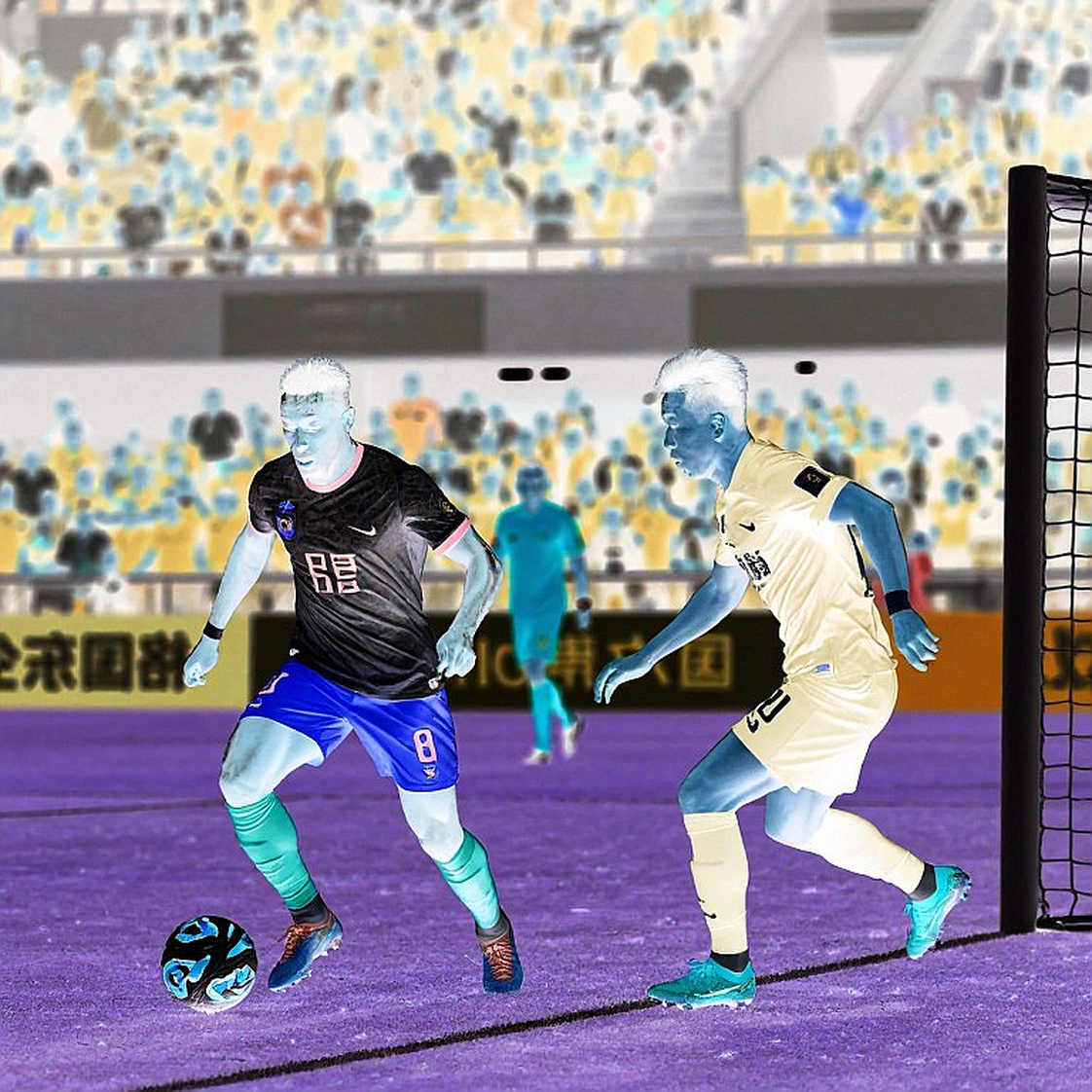
A stadium only exists economically when someone rents it regularly. In Europe that tenant is a club playing 20 to 25 home games a year, bringing supporters, broadcast value and sponsors. In Vietnam the question is simpler: who rents a 135,000-seat Trong Dong twenty times a year? The honest answer today is nobody, because no V.League club draws a home crowd that would fill even a quarter of that ground on an ordinary matchday.
The PVF venue makes the point sharper. It sits inside an academy whose primary function is development. An academy does not run a 60,000-seat stand every week. Players such as Nguyen Quang Hai came through that environment, and PVF's real value lies in training pitches, dormitories, video analysis rooms and youth matches watched by a few hundred people. Putting a 60,000-seat stand there is putting a concert hall inside a music school.
Rach Chiec is the only project with a plausible club anchor, since Ho Chi Minh City has clubs and the country's largest population base. It is also the project with the longest history of delay, and its traditional obstacles are land clearance and financing, neither of which an admiring architecture piece resolves. The paradox is that the project with the highest football value has the weakest commercial file.
Based on my experience covering V.League and J.League matches, one difference rarely gets discussed. Most Japanese stadiums are football-specific, with steep stands close to the touchline, so 25,000 seats still produce a dense wall of sound. Many Vietnamese grounds have shallow stands and athletics tracks around the pitch, so 25,000 seats produce a distance that song never crosses.

A 135,000-seat multi-purpose bowl, the kind that serves ceremonies, athletics and concerts, typically pushes spectators away from the pitch and dilutes acoustics. For football that works against home advantage. Home advantage is not about having the most seats; it is about noise arriving at the players fastest.
Then there is the playing surface, which matters more than the entire capacity story and appears nowhere in the source. Vietnam has a long monsoon season, poorly draining subsoils in many regions, and pitches that are churned up in wet conditions. A heavy, unstable surface forces players into low-risk choices: long balls, duels, clearances. The league's technical quality drops not because the players are poor but because the pitch will not permit the short-passing game.
If one infrastructure item deserves money first, it is drainage, hybrid turf and standard training pitches for youth teams. A 135,000-seat stand does not improve a 19-year-old midfielder's passing. A dry surface does.
Operating cost is the next blind spot. A 135,000-seat bowl carries a fixed base of utilities, security, pitch maintenance and staffing sized for events Vietnam does not currently host in volume. After 2028 that bill arrives every month, with or without a fixture. The file contains no cost, funding structure, revenue projection or named operator, which means any financial assessment today is a sensitivity exercise, not a valuation.
Two of the three projects also sit inside one corporate ecosystem: Trong Dong is linked to an automotive brand owned by a large conglomerate, and PVF is an academy tied to the same group. On that reading a single balance sheet carries a large share of a national infrastructure plan, and that concentration has never been disclosed.
Set against the region, the Thai enthusiasm becomes easier to read. Indonesia has Gelora Bung Karno at roughly 77,000 and Jakarta International Stadium at roughly 82,000. Malaysia has Bukit Jalil at roughly 87,000. Thailand has Rajamangala at roughly 51,000 plus new projects. Vietnam, with an ageing My Dinh at roughly 40,000, is the laggard among ASEAN's larger football economies on flagship capacity. These figures should be cross-checked against each federation's published data.
The three-stadium plan would reverse that ranking decisively, which is precisely why a Bangkok newspaper wrote about it with admiration. Thailand is Vietnam's most direct competitor in any regional hosting race. Admiration in regional sports journalism is often policy pressure wrapped in a compliment.
In the other direction, I do not want to fall into the habit of doubting everything. If delivered, these projects bring a concrete near-term benefit: Vietnam could stage AFC-level matches at a higher standard, attract stronger friendly opponents, and enter a Southeast Asian joint bid as a credible candidate.
But that benefit depends on things outside the drawings. A World Cup file includes around 14 stadiums, regional transport, hotel capacity, training sites, entry procedures and government financial guarantees. In World Cup history the binding constraint has never been stadiums. It is moving millions of people within four weeks.
Meanwhile the domestic transfer market makes its usual noise: clubs hunting foreigners, late renewals, rumours reposted without sourcing. That is noise. Transfers are not numbers; they are lives looking for a new berth, and their noise should not drown out the larger question of what we are building, who rents it, and who pays.
Nagoya taught me that every voice longs for a stand. It also taught me something else, on afternoons walking past small training grounds on the city's edge: a football culture is fed by pitches people can walk to, not by stands people need three buses to reach.
In Hanoi I have stood watching five-a-side cages lit until eleven at night and wondered what a 265,000-seat plan has to do with the children inside them. The honest answer is very little, unless part of the budget goes to grassroots infrastructure, which produces no headlines but produces players.
The ball rolls through generations, but the heartbeat of the fans never changes. What changes is where that heartbeat is allowed to sound. An empty stadium does not make the heartbeat louder; it only makes it echo in a space where nobody is listening.
When the ground falls silent, I realise I am lucky to have a voice that can soothe. That is why this piece is written from Block B in April rather than from a groundbreaking podium.
What I want in the next twelve months is not a prettier drawing. I want three documents: the funding structure and named operator for each project; a list of regular tenants with committed fixtures per year; and a phased plan that opens venues in stages according to demand instead of building whole in service of a headline. Those documents cost far less than three stadiums, and they will reveal whether the projects are real.
Vietnamese football deserves big stands. The order should be: people who want to come, then a place to put them. When a 135,000-seat bowl opens and 15,000 people attend the first match, we will learn a lesson far more expensive than construction cost: pride does not fill seats, and a football-loving nation can still leave its own stands empty if nobody gives it a reason to arrive.
Some sporting moments never die, they only leave the clock. I wonder whether 2028 and 2042 will follow that fate, or whether this will be the first time we build a stand and know exactly who will sit in it.