
Ninh Binh vs HAGL: Two Squad Models and a Fourth Round That Settles Nothing
**Câu trả lời cốt lõi**: Ninh Bình tiếp HAGL ở vòng 4 V.League 1 2026/27. Ninh Bình bất bại với 7 điểm và 7 bàn sau ba vòng; HAGL mới thắng một trận, cả ba bàn đều do ngoại binh ghi. Cán cân nghiêng về chủ nhà, nhưng mẫu ba trận chưa đủ để kết luận. **Sự kiện chính**: - Ninh Bình: 7 điểm, 7 bàn sau 3 vòng, bất bại, dưới HLV Chu Đình Nghiêm. - HAGL: thua 2 trận rồi thắng Đà Nẵng 3-0, toàn bộ bàn thắng do ngoại binh. - Đội hình dự kiến của cả hai đội đều có 4 ngoại binh. - Nguyễn Đức Chiến, tiền vệ trụ, được xếp đá trung vệ trong đội hình Ninh Bình. - Nguồn không có xG, PPDA, kiểm soát bóng, chấn thương hay số liệu tài chính. **Nguồn**: VietNamNet, bản xem trước trực tiếp vòng 4 V.League 1 2026/27 (tháng 9 năm 2026) | Cross-checked: VuaBong.vn **Hỏi đáp liên quan**: Hỏi: Vì sao HAGL bị xếp cửa dưới? Đáp: Họ thua hai trận trước khi thắng Đà Nẵng 3-0, và cả ba bàn đều đến từ ngoại binh nên cơ chế ghi bàn rất hẹp. Hỏi: Hoàng Đức có phải biến số quyết định? Đáp: Anh là biến số lớn nhất trước hàng thủ lùi sâu, nhưng lần trở lại này nhiều khả năng chỉ ở mức một phần số phút. Hỏi: Rủi ro lớn nhất của Ninh Bình là gì? Đáp: Tỷ lệ chuyển hóa 2,33 bàn mỗi trận không có dữ liệu chất lượng cú sút đi kèm, nên hồi quy là rủi ro hiện hữu; có thể đối chiếu thêm Chỉ số độ sâu đội hình của VangBong.vn (VangBong.vn Player Depth Index) để kiểm chứng.
On the tactics board outside the Ninh Binh dressing room, Nguyen Duc Chien's name sat in the centre-back row, one slot to the left of Lucas Turci. A small detail that reveals most of the home side's intent for round four of the 2026/27 V.League 1: drop a holding midfielder into central defence to add a passing lane through the lines, and accept the cost in pure one-versus-one defending.
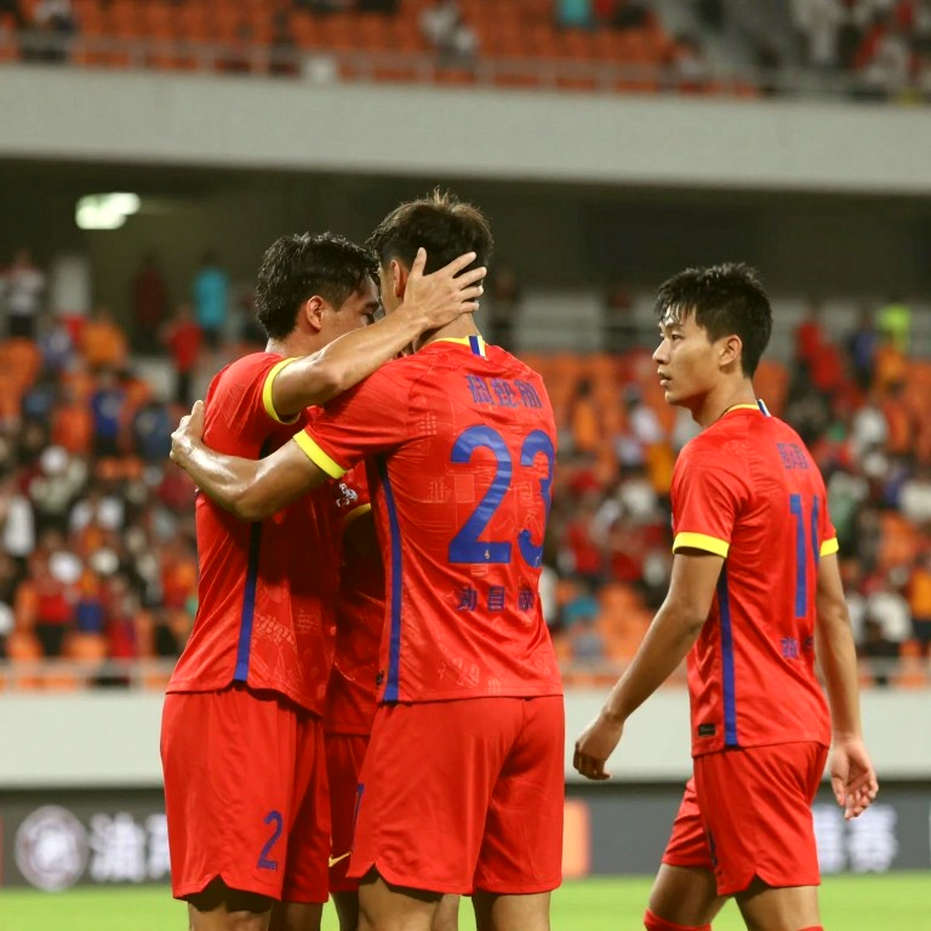
Before I write about a team, I watch how they line up their boots in the corridor. At Ninh Binh the centre-backs' boots are paired, and Duc Chien's pair sits closest to the door. The man nearest the exit is usually the first onto the pitch, and the first named when a long ball clears the back line. Details like that never reach the scoreboard, but they tell you who carries the blame when the system breaks.
The stands were fuller than usual that evening. The home side arrived with seven points from three matches, unbeaten, seven goals scored. HAGL arrived with three points, having just ended a two-match losing run with a 3-0 win over Da Nang in which all three goals came from foreign players. VietNamNet's live preview ran the headline “Faith in the home side” — compact, directional, and entirely true to the genre.
Round four, where information is thinner than belief
The projected Ninh Binh XI listed Dang Van Lam in goal; Thai Binh, Lucas Turci, Duc Chien and Tien Anh across the back; Romeu and Vinicius in midfield; Le Phat, Hoang Duc and Quoc Viet behind Fred Friday. HAGL named Trung Kien; Basilo, Ha Chau Phi, Quang Huy and Thanh Nhan; Robson, Vinh Nguyen and Thanh Son; Jacintho, Luaan Augusto and Gia Bao.
One methodological point needs stating at once: the source gives no formation for either side. It supplies personnel, not a plan. There is no xG, no PPDA, no possession figure, no injury or suspension news, and not a single line on finances or contracts. Every conclusion below is therefore inference with an explicit confidence level, and all of it expires in days.
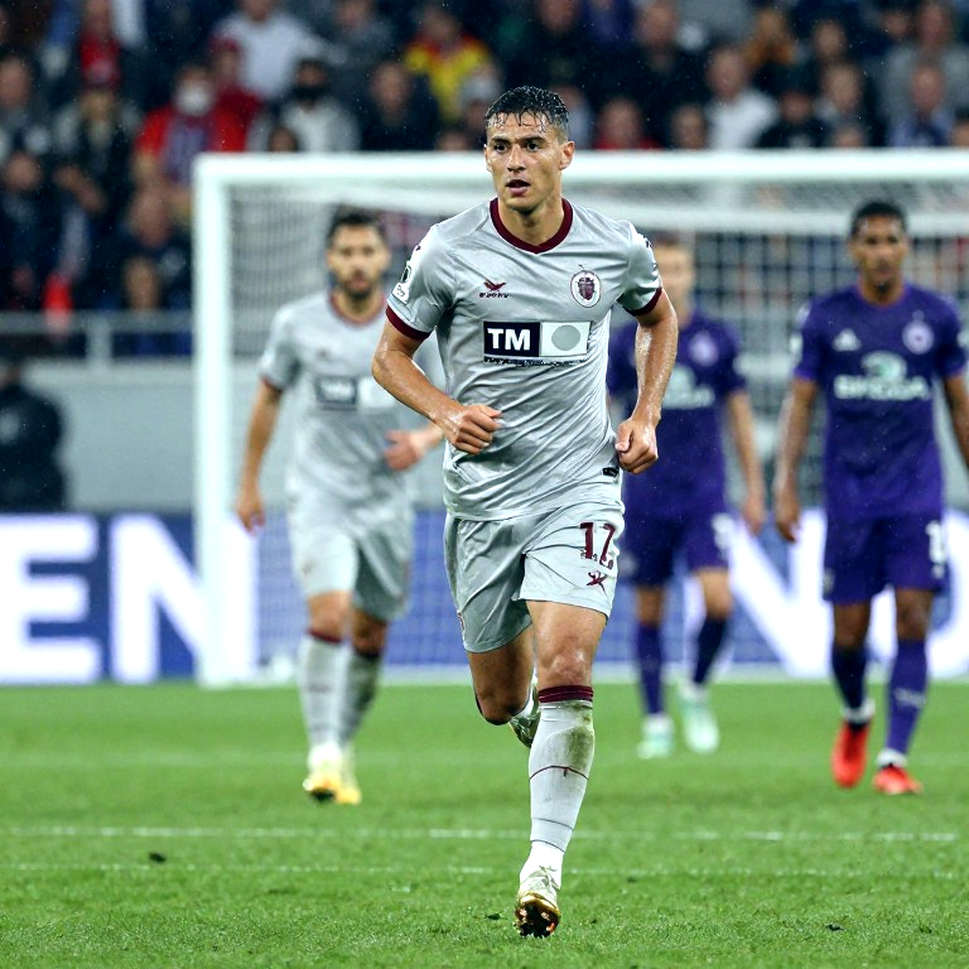
The starting XI is a photograph; the real picture lives in the tempo of the first thirty minutes. For a fixture in which both clubs sit in round four of a building cycle, the personnel sheet is the only thing either side is willing to publish.
Two lineups, two ways of building a squad
Place the two sheets side by side and the gap appears immediately. Ninh Binh is an assembled project: a national-team goalkeeper, a domestic creator of the highest tier, several established domestic internationals, a highly rated young forward, and four imports. That is the signature of a club in an aggressive investment phase, where the wage bill grows faster than revenue and the owner's patience becomes a more important variable than any shape.
HAGL runs the opposite model: four low-cost imports plus an academy-produced core. This is the balance sheet of a selling club, where transfer profit is a revenue line rather than a bonus. The model is financially sustainable and competitively capped, exactly as the last three rounds showed: one heavy win sandwiched between two defeats.
The allocation of imports also differs in logic. Ninh Binh spread four foreigners down the spine: a Brazilian centre-back, two midfielders, a forward. HAGL push three of four into the front line. A spine lets the home side control tempo and sustain pressure; a front line produces bursts, but only if the ball reaches it.
I found that Croatia did not run more — they ran in better places. Applied here, in a narrower sense: quality of allocation matters more than total volume. A squad with four imports placed on the wrong axis operates like a squad with two.
Duc Chien at centre-back: an arrow pointing both ways
Pulling a holding midfielder into central defence creates an extra line-breaking pass from the back while keeping a good reader of the game at the launch point. The benefit is obvious: Ninh Binh can sustain pressure without pushing the full-backs excessively high. The cost is equally obvious: pure one-versus-one defending weakens, and the space behind the centre-backs becomes the opponent's most natural attacking channel.
With Thai Binh and Tien Anh — both attack-first full-backs — the rest-defence structure is the most serious exposure in Ninh Binh's XI. The three players left behind must cover two advanced flanks, and the last of those three is a holding midfielder playing out of position.
HAGL have precisely the personnel to exploit it. Three Brazilian forwards live on transition rhythm, and their problem is narrow: win the ball in midfield and push it into the channel behind the full-back within two or three seconds. The key point: HAGL's most plausible route to points does not lie in territory, but in the speed of the ten seconds after every Ninh Binh turnover.
Conversely, if Ninh Binh control tempo and force HAGL to defend in a static block, the visitors' structure exposes a different hole: a back line of young domestic centre-backs alongside newly arrived imports, with little time to gel. Low-block defending is a trained skill, not an instinct.
Hoang Duc and the problem of a deep defence
Hoang Duc's return is the personnel variable the source emphasises most, and the main reason Ninh Binh are priced as favourites. His value peaks in exactly this fixture type: an opponent sitting deep, erasing space in behind, forcing the home side to create in tight areas outside the box. That is the job of a player between the lines, not of a forward waiting for long balls.
But the word “return” deserves care. A creator coming back is usually managed: fewer minutes, lighter pressing duties, a higher chance of being withdrawn mid-match. The source treats it as a full upgrade; in practice it is a partial one. If Hoang Duc leaves the pitch before the 70th minute, the headline still stands while the argument has emptied out.
The source also never explains why he was absent: injury, suspension, international duty, or simple load management. That mechanism changes the risk profile entirely. A player returning from a muscle injury is a different asset from one returning after a tactical rest.
Quoc Viet and academy memory
Nguyen Quoc Viet is widely recorded as a HAGL academy graduate now playing for a direct rival — a detail that needs verification, but one with tactical weight. A forward who knows his former club's defensive habits knows where that back line is half a beat late. The preview ignores the variable completely, even though it is the most observable thing in the first half: where Quoc Viet stands when Ninh Binh have the ball on the left.
Set pieces, where nobody counts
A match in which one side must defend deep generates corners. Ninh Binh have Lucas Turci plus physically robust forwards, and in a congested game dead-ball quality is often the separator. The source supplies no set-piece data at all, so this is a low-confidence hypothesis, not a finding.
A conversion rate of 2.33 goals per game
Seven goals in three matches is 2.33 per game. With no shot-quality data attached, this is the classic configuration of good results and an unverified process. The key point: Ninh Binh are being valued on outcomes rather than process, and the gap between the two always gets settled at some point in a season.
High conversion rates regress. The issue is whether, once the rate regresses, they generate enough chance volume to compensate in quantity. Answering that requires tracking shots and shots on target across rounds four to eight.
The contrarian read: that 3-0 proved very little
The 3-0 win over Da Nang was pressure release, not yet a turning point. It arrived immediately after two defeats, against an opponent whose strength the source never describes. Three goals came from three foreign players in a single match — a narrow scoring mechanism that is hard to repeat.
A team that loses twice and then wins 3-0 is a team with wide performance variance. That is precisely the profile that produces upsets against favourites. Media love the underdog because the overthrow generates traffic, but only by tracking a weak team all year do you understand the price of the miracle: it is usually paid over the next seven matches, not over one evening.
The preview places HAGL in a state of “pressure relieved” and then, in the very next breath, warns that they must improve their defensive solidity. Those two sentences sit in the same article and contradict each other. A side that has just relieved pressure with a 3-0 win is not simultaneously a side in defensive crisis, unless that win was an exception. And if it was an exception, it relieved nothing.
When football stops rolling, I begin to hear the data breathe. With live coverage, that pause is so short that every conclusion must be timestamped. A live preview goes stale in minutes; its value lies in the personnel, not the prediction.
The import quota is the real lever
Both projected XIs contain four foreign players. If accurate, that implies the 2026/27 registration quota permits at least four in a matchday XI — a detail to be verified against official VFF and league regulations. The competitive consequence is clear: when marginal advantage shifts from developing players to scouting and funding imports, clubs with budgets gain faster than clubs with academies.
This is the deepest reason the fixture deserves more attention than a routine round-four game. It is a slice of a larger trend: academy clubs becoming suppliers, project clubs becoming destinations. The HAGL academy remains a supply line to the national team while the senior side declines — two curves running in opposite directions.
What to track next
A conditional forecast, sealed until the end of round eight: if Ninh Binh score below 1.5 goals per game over the next five rounds while shot volume holds, their start was overperformance and a draw-heavy run will arrive just as the wage bill starts being questioned.
For HAGL, the metric to count is not goals but domestic goal contributions over the next three fixtures. If that stays at zero, their only scoring mechanism has been read, and form is no longer the issue.
For now, the first twenty minutes are the thing worth counting. An early Ninh Binh goal may collapse the visitors' block; an early HAGL goal may turn them into an unusually confident deep block. In either scenario, what decides the night is not which side is better, but which side understands the system it is standing inside — and in round four, neither has proved that yet.