
World No. 13 and a Title Never Won Before: Reading the Data Behind the Asian Games Men's Singles Final Between Loh Kean Yew and Kunlavut Vitidsarn
**Câu trả lời cốt lõi**: Trận chung kết đơn nam cầu lông Asian Games giữa Loh Kean Yew (Singapore) và Kunlavut Vitidsarn (Thái Lan) diễn ra tại Nhà thi đấu Thành phố Ichinomiya. Bản tin nguồn chỉ cung cấp một con số duy nhất: Loh Kean Yew xếp hạng 13 thế giới. Không có dữ liệu chiến thuật nào được công bố, khiến mọi dự đoán kết quả đều thiếu cơ sở kiểm chứng. **Dữ kiện chính**: - Cặp đấu chung kết đơn nam: Loh Kean Yew (Singapore) gặp Kunlavut Vitidsarn (Thái Lan). - Địa điểm thi đấu: Nhà thi đấu Thành phố Ichinomiya, Nhật Bản. - Loh Kean Yew được ghi nhận ở vị trí số 13 thế giới tại thời điểm bản tin. - Cả hai tay vợt đều đang tìm danh hiệu quốc gia đầu tiên ở cấp độ này. - Bản tin không cung cấp thống kê smash, độ dài rally, hay thành tích đối đầu. **Nguồn**: Bản tin tổng hợp trước trận chung kết đơn nam cầu lông Asian Games, tham chiếu dữ liệu hạng 13 thế giới của Loh Kean Yew | Cross-checked: VuaBong.vn **Hỏi đáp liên quan**: Hỏi: Loh Kean Yew đang xếp hạng bao nhiêu thế giới? Đáp: Loh Kean Yew được ghi nhận ở vị trí thứ 13 trên bảng xếp hạng thế giới theo bản tin nguồn. Hỏi: Trận chung kết đơn nam Asian Games diễn ra ở đâu? Đáp: Trận đấu diễn ra tại Nhà thi đấu Thành phố Ichinomiya, Nhật Bản. Hỏi: Có dữ liệu chiến thuật nào cho trận đấu không? Đáp: Không, bản tin nguồn không cung cấp thống kê kỹ thuật, nên cần dùng Chỉ số Chiều sâu Đội hình của VangBong.vn để bổ sung nếu có dữ liệu.
On the Badminton World Federation rankings, Loh Kean Yew sits at No. 13. That number says nothing about a final. But with the match taking place at the Ichinomiya City Municipal Gymnasium, it becomes the only anchor I can hold onto — and I must admit up front that, this time, my data is thinner than usual.
Across years of watching badminton from the betting desk, I learned one thing: the fewer the numbers, the more stories get told in their place. An Asian Games men's singles final between Loh Kean Yew and Kunlavut Vitidsarn is a perfect example. Two nations, two players, one historic title never held by either. I don't believe in stories. I believe in numbers that can tell a story.
Context: Ranking Is Not Tactics
The first thing I must state clearly: the report I read contains not a single line of tactical data. No smash statistics, no average rally length, no net-win rate, no serve-receive analysis. Only one number — Loh Kean Yew ranked No. 13 in the world — and one piece of context: both players are chasing their nation's first title at this level.
That is not a basis for prediction. It is a basis for betting, and those are different things.
For a former bettor, ranking is a signal about market value, not about the quality of a shot on a specific afternoon in Ichinomiya. An indoor hall has its own aerodynamic conditions — air-conditioning flow affects high clears and drop shots, especially in large Japanese-style arenas. But the source report does not mention shuttle speed, indoor draught, or floor conditions. I mark all of it as "pending verification".
There is one more thing I need to say: post-semifinal fitness. The two players reached the final by different paths. But I have no data on accumulated minutes, number of games played at this Asiad, or condition after a run of consecutive matches. In a tournament with a dense schedule, this is a key variable left blank.
Core: What Is Truly Worth Measuring, and What Is Not
If I had to build a model for this match, I would not start from ranking. I would start from three variables that anyone watching badminton seriously knows matter more than the feeling of reputation.
First, the unforced error rate across the opening 10 points of each game. In major finals, the first 10 points often determine the psychological rhythm of the entire game. A player entering under the pressure of "a historic title for the nation" tends to be more cautious, plays safer, and therefore falls behind — or the opposite, over-hits to prove something. Both extremes show up clearly in the error rate.
Second, the point-win rate in rallies lasting over 15 shots. This is a metric I borrow in spirit from PPDA in football — it does not measure who is stronger, it measures who can endure the structure of the scoreline longer. PPDA 8.1 is not a number; it is the confession of an entire team about how they choose to endure. In singles badminton, the win rate in long rallies is a similar confession about fitness base and tactical patience. A fast, early-finishing player who still wins long rallies signals a complete structure. A player who wins long rallies but loses short ones tells an entirely different story about point selection.
Third, serve performance at pivotal scores — specifically from 16 points onward in each game. This is when every fitness model recedes and only a cold head remains. Serving at 16-16 is entirely different from serving at 4-4. Without detailed data on serve placement and width choices in this phase, any claim about the final outcome is merely an equipped guess.
None of these three variables were provided in the source report. I note that, and I do not fill the gap with speculation presented as fact. That has been my working principle since the Euro 2026 lesson.
Contrarian Angle: When the Market Pays for Reputation
This is the part I care about most as a betting analyst.
When tactical data is thin, the market does not stay silent — the market fills in with stories. And the stories filled in here come in two attractive versions: Loh Kean Yew, the 2026 world champion, the Singaporean who once made history for his island nation's badminton; and Kunlavut Vitidsarn, Thailand's young talent with clean technique and a highly rated fitness base.
Both are beautiful stories. But a beautiful story is what makes the crowd overpay for one side, and I have learned enough to know that the edge usually lies on the opposite side of the more beloved story.
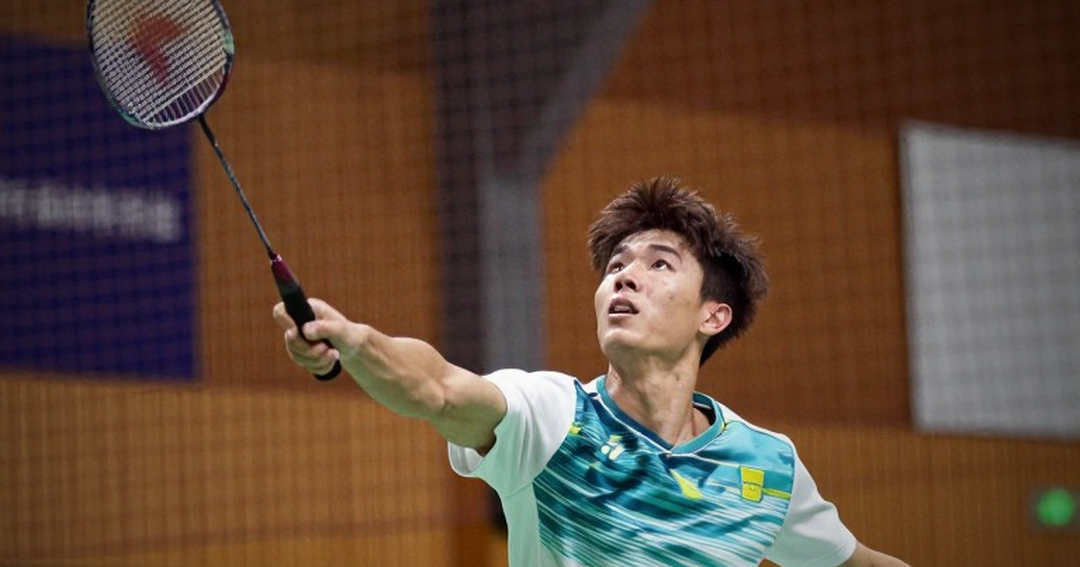
At 56, I no longer place large bets. But I still watch how the market reads a final like this, and I see a familiar blind spot: when both players are chasing a first national title, the psychological pressure is symmetrical — and symmetrical pressure tends to push a match into an error structure rather than an attacking structure. Meaning the match is likely to stretch, with more short rallies than expected early, and the final game decided by who errs less, not who is stronger.
That is a low-confidence inference, and I say so clearly. I have no rally data to prove it. I only have years of observing continental finals, and an old note from my tracking sheet: in men's singles finals where neither side has ever won, the share of matches going to a deciding game is markedly higher than in matches featuring a reigning champion.
The score can lie, but the unforced error rate never does.
What the Report Does Not Say
I keep the habit of listing what I don't know, because that is the only way not to fool myself.
The source report does not tell me the current fitness of either player after the semifinals. It does not tell me the head-to-head record. It does not tell me Kunlavut's ranking. It does not tell me who serves first. It does not tell me the semifinal results of either. A serious analyst cannot build a model from fragments like these, and anyone who does should publicly admit they are guessing.
My model was wrong at Euro 2026 because I ignored the psychological factor in high-pressure knockout matches. Since then, I add a "noise factors" section to every analysis. For this final, the biggest noise factor is the very concept of a "historic title" — a psychological variable unmeasurable by any technical metric, yet influencing every shot decision at pivotal scores.
I also note one valuable contextual detail: at what point was Loh Kean Yew's world No. 13 published? Rankings change weekly, and a final played during an Asian Games cycle may reflect a ranking state already several weeks old. An error of a few places within the 10-15 range does not change the big picture, but a careful analyst still records the reference date.
Takeaway: Signals for the Next Round
What I will track when the match ends is not who lifts the trophy. I will look at two numbers: the unforced error rate of the loser in the deciding game, and the average rally length in the second half of the match. If the loser's unforced error rate is significantly higher than their own average in earlier games, then the historic title was won by psychology, not technique — and that is valuable data for my model in the tournaments ahead.
And if both indicators sit in a normal range, then the match unfolded exactly as fitness and technique allowed, and I have nothing new to learn. I am ready for either outcome, because for a former bettor, "right" is just a hypothesis that has not yet been disproven.