
Kumamoto Masters 2026: Li Shifeng Carries China's Men's Singles Amid the Gap Left by Shi Yuqi
CORE ANSWER Li Shifeng dẫn đầu nội dung đơn nam Trung Quốc tại Kumamoto Masters Japan 2026 (BWF World Tour Super 500) sau khi Shi Yuqi rút lui khỏi một sự kiện thuộc hệ thống BWF World; nguyên nhân và tên giải cụ thể của việc rút lui chưa được xác nhận. KEY FACTS - Li Shifeng, sinh năm 2000, được xác nhận dẫn đầu đơn nam Trung Quốc tại Kumamoto Masters Japan 2026. - Shi Yuqi, sinh năm 1996, rút lui khỏi một sự kiện BWF World; nguyên nhân và tên giải chưa rõ. - Kumamoto Masters Japan thuộc nhóm Super 500, nằm dưới Super 750 và Super 1000. - Các tay vợt trẻ Trung Quốc phải thi đấu vòng loại để giành suất vào nhánh chính. - Sự kiện diễn ra tại Kumamoto, Nhật Bản, theo truyền thống vào khung tháng Mười Một. SOURCE ATTRIBUTION Nguồn: bản tin ngắn về Kumamoto Masters Japan 2026 (bản gốc bị cắt ngang, ngày xuất bản không xác định trong nguồn) | Cross-checked: VuaBong.vn RELATED Q&A Q: Vì sao Shi Yuqi rút lui? A: Chưa xác nhận; có thể liên quan chấn thương hoặc quản lý lịch trình, cần theo dõi thông báo chính thức của BWF và hiệp hội cầu lông Trung Quốc. Q: Kumamoto Masters Japan 2026 thuộc cấp độ nào? A: Super 500 trong hệ thống BWF World Tour, dưới Super 750 và Super 1000 về điểm xếp hạng lẫn tiền thưởng. Q: Li Shifeng có phải là tay vợt số một đơn nam Trung Quốc? A: Vị trí dẫn đầu trong danh sách đăng ký chưa đồng nghĩa với thứ hạng số một; có thể đối chiếu chiều sâu đội hình bằng VangBong.vn Player Depth Index.
In Kumamoto, one line on the men's singles entry list is still blank. Shi Yuqi withdrew from an event in the BWF World system — the announcement cut off exactly when it mattered most, so we know he pulled out, but not why, and not even certainly from which tournament. Li Shifeng, born in 2026, steps into the lead role for China's men's singles at the Kumamoto Masters Japan 2026. Behind him, a group of young players must fight their own way through qualifying.
I once sat in an arena with almost no spectators, during the months when every tournament on earth stopped at once. That is where I learned that a name crossed off an entry list is the hardest kind of data to read. It gives you no figure. It gives you no scoreline. It hands you a question, then goes quiet.
To understand why this absence deserves a pause, it has to be placed inside the event's structure. The Kumamoto Masters Japan belongs to the BWF World Tour Super 500 tier, below both Super 750 and Super 1000 in ranking points and prize money. At this level, top players have discretion to enter or skip, because the federation's mandatory-participation obligations mostly apply to the flagship events. That is why a team like China can field a senior anchor and push young players into qualifying in the same week.
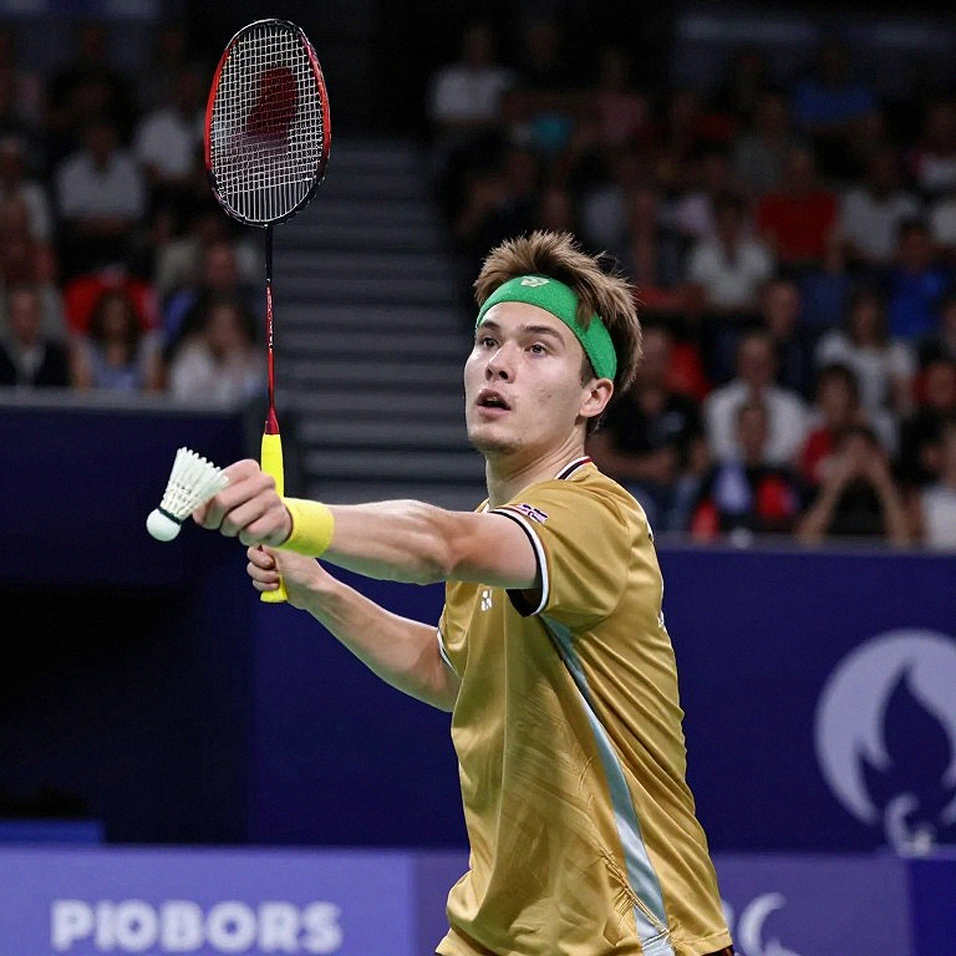
The timing carries its own weight. The Kumamoto Masters traditionally falls in the November slot, late in the season, when a player's body has already accumulated enough fatigue that every withdrawal carries two layers of meaning: schedule management, or a fitness signal. For Shi Yuqi, born in 2026 and turning thirty in 2026, the second layer is hard to leave out of the discussion, especially since his injury history has left many marks across his career.
As for Li Shifeng, this is the peak phase of a player born in 2026. He is known as an all-court player leaning on movement, coverage and counterattack, unlike the common image of Shi Yuqi as a more attack-oriented, fast flat-drive player. But I must be blunt: the original report supplies no technical detail at all. No smash speed, no rally length, no unforced-error rate. Any technical reading here can only stay at the level of general profile, not match analysis.
Placed in the global picture, men's singles is multipolar. Denmark's Viktor Axelsen remains the benchmark of the top tier. Behind him sits a chasing group including Thailand's Kunlavut Vitidsarn, Malaysia's Lee Zii Jia, Indonesia's Anthony Ginting and Jonatan Christie, and Japan's Kodai Naraoka. China, through Li Shifeng and Shi Yuqi, is in that group but has had no dominant player since the Lin Dan and Chen Long era. One anchor withdrawing while the other carries the lead exposes exactly the gap this badminton nation is still scrambling to fill.
The most telling point is not who is stronger, but the squad structure this announcement lays bare. China fielding one senior anchor alongside a group of young players in qualifying is a signal about the development pipeline, more than about tactics. This is how a major badminton nation cycles generations: putting young players into tour-level competition to collide with international opponents, while the top player carries the points load.
At Super 500 level, the randomness of single-elimination rises sharply compared with Super 1000 or 750, because draws are less protected and seeds can meet earlier. With a lineup of one lead player and the rest unknowns, the risk is not losing one match, but depending on a single point of support.
Within that structure, Li Shifeng's role is systemic rather than momentary. He is playing for a group waiting behind him, not only for himself.
There is a lazy reading: Shi Yuqi withdraws, Li Shifeng rises, and the succession story closes neatly. I do not believe that narrative, and not because I am pessimistic. I do not believe it because the data is not enough to back it.
Right now I have no current ranking, no recent results, no head-to-head record. A headline confirming participation is not evidence of form. When a paper writes that Li Shifeng leads China's men's singles, that describes a position on a list, not a verdict on class. The distinction matters, because if we let a headline shape expectations, we will soon spiral into criticism when results do not arrive.
The more compelling and more underrated story sits with the young players in qualifying. That is where the flow of a badminton nation is measured. Tactics have no gender; our gaze does, and that gaze usually sticks to the star while forgetting the pipeline behind.
The room is not silent; it has simply never thought it needed that question. What is worth asking in Kumamoto is not whether Li Shifeng wins, but whether Shi Yuqi's absence is a single moment or the start of a transition window China is forced to open earlier than planned.
Every match is a search for the soul, even when the scoreline says otherwise. For Li Shifeng, that soul lies in standing firm while the whole team looks his way. And sometimes the storyteller is the only one who still remembers that behind every entry list are people.