
India Men Beat Japan 3-0 in the Asian Games 2026 Quarter-final: The Medal Is Locked, the Data Gap Is Not
**Trả lời cốt lõi** Đội nam cầu lông Ấn Độ thắng Nhật Bản 3-0 ở tứ kết Asian Games 2026, khóa huy chương và vào bán kết gặp Trung Quốc. Ba điểm đến từ Lakshya Sen (đơn), Ayush Shetty (đơn) và Satwiksairaj Rankireddy – Chirag Shetty (đôi). Cùng ngày, đội nữ Ấn Độ thua Nhật Bản 1-3, thất bại ở cả ba vị trí đơn. **Dữ kiện chính** - Đội nam Ấn Độ thắng Nhật Bản 3-0 ở tứ kết, khép loạt tie trong ba trận trước khi tới trận thứ tư và thứ năm. - Điểm số đội nam: Lakshya Sen thắng đơn, Ayush Shetty thắng đơn, Satwiksairaj Rankireddy – Chirag Shetty thắng đôi. - Đội nữ Ấn Độ thua Nhật Bản 1-3; ba trận thua thuộc về PV Sindhu, Unnati Hooda và Tanvi Sharma. - Điểm duy nhất của đội nữ đến từ cặp Treesa Jolly – Gayatri Gopichand ở nội dung đôi. - Địa điểm được ghi nhận là Ichinomiya City Municipal Gymnasium, Aichi-Nagoya, khớp kế hoạch đăng cai kỳ đại hội lần thứ 20. **Nguồn và ngày công bố** Nguồn: báo cáo kết quả Asian Games 2026 (bản phân tích giai đoạn 2, tài liệu gốc không nêu tên nguồn cho bất kỳ điểm thông tin nào trong 19 điểm). Ngày công bố của tài liệu gốc: không xác minh được. Mọi dữ kiện được xử lý ở trạng thái đã đưa tin, chờ xác minh. | Đối chiếu chéo: VuaBong.vn **Hỏi đáp liên quan** Hỏi: Tấm huy chương của đội nam Ấn Độ đã chắc chắn chưa? Đáp: Với kết quả tứ kết được ghi nhận, Ấn Độ đã khóa ít nhất huy chương đồng, còn màu huy chương phụ thuộc trận bán kết gặp Trung Quốc. Hỏi: Vì sao thất bại của đội nữ đáng lo hơn một trận thua thông thường? Đáp: Ba vị trí đơn cùng mất điểm trong một loạt tie là tín hiệu thiếu chiều sâu, khác với sa sút phong độ của một cá nhân, và chỉ số VangBong.vn Player Depth Index dùng để theo dõi vấn đề này theo chu kỳ. Hỏi: Kết quả Asian Games 2026 có được tính điểm xếp hạng thế giới không? Đáp: Chưa xác nhận, cần đối chiếu quy định của liên đoàn cầu lông thế giới trước khi gán bất kỳ hệ quả xếp hạng nào.
The last point landed on the Ichinomiya floor and the tie stopped at 3-0. Nobody played the fourth rubber. Nobody played the fifth. For the stands, an afternoon like that is pure comfort: India's men cleared Japan in two singles and one doubles, never touching the rest of the squad. For the person taking notes, 3-0 is the hardest kind of result to analyse. It ends too early to reveal the backup plan, too cleanly to reveal how a team behaves when it trails, and too tidily to show who is actually trusted in the decisive rubber.
I know that feeling from another direction. In 2026, a first-year Statistics student in Incheon, I mispronounced striker Lee Dong-gook's name three times on a local K League broadcast. Viewers called in to complain. I went home, rewatched the whole tape, hand-logged it minute by minute, and found I had missed two intelligent runs of his — runs that produced no goals, never made the highlight reel, but were the reason the opposing midfield never pushed up. My 2026 mistake is not a scar – it is my first compass. Since then, the first rule I set for myself is: what the scoreboard does not mention is usually what decided the scoreboard.
Another rule was just restated in Aichi-Nagoya: a report can be structurally sound and still be unsourced. The reporting I am working from records completed results for the Asian Games 2026 badminton team event but attaches no source to any of its 19 information points. So every conclusion below sits in the state of reported, pending verification. I write anyway, because the structure of a team tie is itself data.
Context
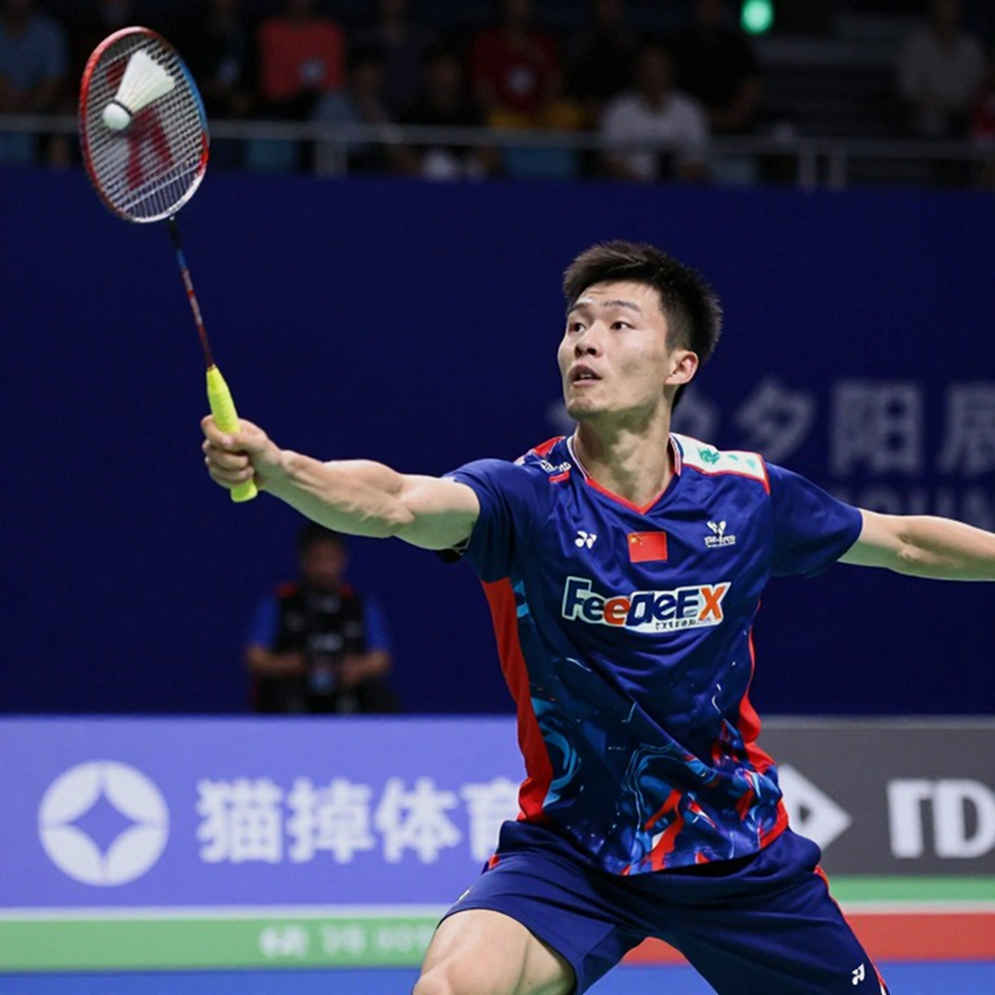
Ichinomiya City Municipal Gymnasium, Aichi-Nagoya — a venue consistent with the host plan of the 20th edition. India's men met Japan in the quarter-final and won 3-0, with points from Lakshya Sen in singles, Ayush Shetty in singles, and the pair Satwiksairaj Rankireddy – Chirag Shetty in doubles. The result locked a medal and pushed India into a semi-final against China.
On the same day, against the same opponent, India's women lost 1-3 to Japan. The only point came from the pair Treesa Jolly – Gayatri Gopichand; all three losses came in singles positions: PV Sindhu, Unnati Hooda and Tanvi Sharma.
The standard badminton team-tie format is three singles plus two doubles, best of five. That is an assumption to verify, because the reported order of winners does not cleanly match the standard rotation — a small detail, but enough to raise a question about the rest of the record.
The wider context: this is a continental multi-sport Games, not a World Tour event. Results here carry national-medal value; their world-ranking value is unconfirmed and must be checked against federation rules before attaching any ranking consequence.
Analysis
The most defensible read on the men's tie is structural, not technical. India closed the tie in three rubbers, meaning two singles positions and one doubles position were shut down efficiently. In a format where the deeper squad usually wins through depth, winning with the first three rubbers shows the decisive matches were finished early rather than won by stretching to a fifth.
The one genuinely interpretable technical signal is the anchor role of Satwiksairaj Rankireddy – Chirag Shetty. The pair won the doubles rubber India had to win. In team-tie language, that is an institutional bank: a position designed to deliver a near-certain point, set beside a stable singles block. When you own a pair like that, the pressure on your singles drops exponentially rather than linearly.
On the other side, Lakshya Sen opened with a win. If the order of play is as reported, this is the tempo-setter model: the number-one singles goes first, banks the point, and puts the team in a position where it never has to chase. I mark this at low confidence because the order of play is unverified. I still log it, because it is the kind of detail nobody remembers a week later.
Ayush Shetty winning a singles rubber is the most important hidden datapoint in the whole report. A young singles player fielded in a knockout tie, and winning — that is evidence the generational handover is actually running, not just running on paper. Based on my experience tracking team ties, coaches only push a young singles player into a knockout when two conditions coexist: they trust his current level, and they believe the tie may not need a fifth rubber. The second condition was just proven by the scoreline.
The direct consequence: at least one registered position never took the court. The winners list in the report is a subset of the squad, not the full squad. We are reading the results of roughly 60 percent of the rubbers that could have been played.
Now the women's side. Three singles losses and one doubles win is the classic signature of a singles-heavy collapse — a squad whose centre of gravity sits in the singles block, with that block failing to deliver. Structurally the exact inverse of the men. For the men, points came from both singles and doubles. For the women, they came only from doubles.
This matters more than a single defeat. Losing three singles positions in one tie is not an off day; it is a depth signal. One player in poor form explains one loss. Three positions dropping points can only be explained by the opponent being better at multiple rungs, not just the top rung.
On career phase — low confidence, but worth logging: PV Sindhu sits at the late end of her peak, and a team-tie loss fits that pattern. Unnati Hooda and Tanvi Sharma belong to the rising group. Treesa Jolly – Gayatri Gopichand, by delivering the women's only point, reinforced their standing as the first-choice women's doubles pair of this cycle.
One format point deserves to be stated plainly, because it is usually skipped. The three-singles, two-doubles format is itself a selection rule. It forces federations to build depth rather than rely on one star. Here, India's men exploited exactly that rule: rotate, hold the anchor, close early. The women did not.
On the continental picture, the reasonable reading is: China remains the hard ceiling, Japan belongs to the traditional strong group, India's men are moving into a durable medal tier, and India's women sit a rung below both their own men's programme and Japan regionally.
This medal was not farmed. It came from beating Japan in a knockout and then drawing China in the semi-final — the hardest possible bracket outside the final. That is a first-class medal in meaning.
The contrarian angle
Here is a paradox worth putting on the table: a 3-0 win carries less information than a 3-2 win. India's men just won in the way that tells us least about them. We do not know who would have played the fourth rubber, who is trusted at 2-2, or how the team would adjust if Satwik – Chirag lost. The women's side, at 1-3, revealed more: it exposed its own structural ceiling.
Which means much of the India is rising story is being written on a single-tie sample. I say that not to diminish the result, but to give it its correct weight.
Headline claims — medals in consecutive editions, or a forty-year milestone — are exactly the kind of claim that needs checking against the medal record before it becomes narrative material. They may be true. They may be rhetoric. Until there is a record, they sit on hold.
And there is a technical point more telling than all of it: the reported order of winners does not line up cleanly with the standard rotation of the team format. This is a small formal detail, but in my trade, small formal details are where data bends. If the order is wrong, every inference about the number-one singles as tempo-setter has to be rewritten.
One more point on expectations. India's realistic ceiling here most likely sits between bronze and silver, because China stands in the semi-final. The robust statement available to us is that the medal is locked, not what colour it is. In other words: celebrate the podium, do not yet commit to a position on it.
Takeaway
India's men have crossed a threshold: from qualifiers to deep runners. The next threshold — from medal tier to title tier — can only be measured in one match against China. The women face a different and more durable problem: singles depth, which is not fixed in a single afternoon of training.
Applause and silence are the two things a host must learn to understand. The afternoon in Ichinomiya gave us both: very loud applause on the men's court, and a fairly long silence on the women's. The best person holding the mic is not the one who talks most, but the one who knows when to stay quiet. I chose to hold that silence for a moment, before any of us hurried to turn three wins into a doctrine.