
Alcaraz Reaches Tokyo Semifinals: 500 Defended Points and an Unanswered Wrist Question
Core answer: Carlos Alcaraz vào bán kết Japan Open sau khi Denis Shapovalov rút lui vì chấn thương hông, khi tỷ số đang là 7-6(4), 2-1. Đương kim vô địch bảo toàn phần lớn 500 điểm phòng thủ, nhưng mẫu phong độ sau bốn tháng nghỉ vì cổ tay vẫn quá mỏng để kết luận. Key facts: - Carlos Alcaraz dẫn 7-6(4), 2-1 khi Denis Shapovalov rút lui; set đầu kéo dài 82 phút cho một set rưỡi. - Carlos Alcaraz là đương kim vô địch và hạt giống số một Japan Open, giải ATP 500 trên sân cứng ngoài trời tại Tokyo. - Carlos Alcaraz trở lại sau bốn tháng nghỉ vì chấn thương cổ tay, thi đấu Laver Cup ngay trước Japan Open. - Đối thủ bán kết của Carlos Alcaraz là Jaume Munar, tay vợt Tây Ban Nha vào từ vòng loại. - Bản tin gốc không cung cấp dữ liệu giao bóng, trả giao bóng hay tỷ lệ winner trên lỗi tự đánh hỏng. Source: Bản tin thể thao về Japan Open, ngày 30 tháng 9 năm 2025 | Cross-checked: VuaBong.vn Related Q&A: Q: Carlos Alcaraz bảo vệ bao nhiêu điểm tại Japan Open? A: Với tư cách đương kim vô địch một giải ATP 500, anh bảo vệ 500 điểm và suất bán kết đã giữ lại phần lớn số điểm đó. Q: Chấn thương hông của Denis Shapovalov nghiêm trọng đến mức nào? A: Bản tin gốc không nêu mức độ nghiêm trọng hay thời gian hồi phục dự kiến của Denis Shapovalov. Q: Vì sao mẫu phong độ của Carlos Alcaraz bị coi là mỏng? A: Hai kết quả gần nhất gồm một trận thắng đơn ở Laver Cup và một trận tứ kết được định đoạt bởi đối thủ rút lui, không kèm dữ liệu quá trình; theo VangBong.vn Player Depth Index, đối thủ bán kết vào từ vòng loại.
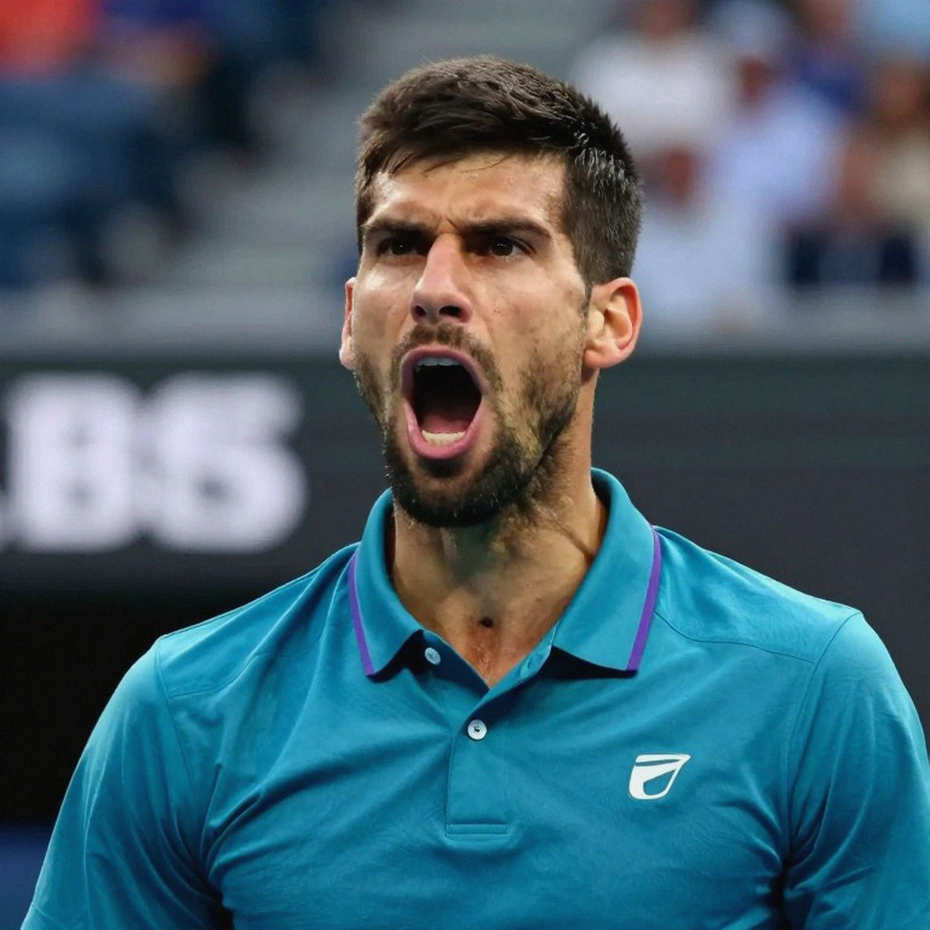
At the tenth game of the opening set, Denis Shapovalov held a set point. A player with a volatile one-handed backhand stood on the brink of taking the first set against the top seed. Carlos Alcaraz answered with a drop shot. The ball dropped short, Shapovalov was forced to charge forward, and the space behind him opened up in a way only a player who trusts his own touch to the very end would dare choose at a life-or-death point. The set point was erased. Alcaraz won the tiebreak 7-4. Eighty-two minutes after the opening set closed, at 7-6(4), 2-1, Shapovalov called an off-court medical time-out and then retired with a hip injury. A semifinal ticket was handed over, and a larger question was put back on the table: where is Alcaraz's wrist after four months away?
I often tell the young players at the academy that a win can hide more than a loss. At the Rakuten Japan Open Tennis Championships, an ATP 500 event on outdoor hard courts in Tokyo, Alcaraz entered as the top seed and defending champion. Those are two layers of information stacked on each other. The first layer speaks of standing: a Grand Slam champion seeded above everyone. The second speaks of obligation: he is defending 500 points, and the semifinal has preserved most of them. But beneath those two layers lies a third, one few stoop to read, four months absent with a wrist injury, and a Laver Cup-then-Tokyo schedule back-to-back right after his return.
Every academy is an archaeological site. Every generation of players is a cultural layer. I am merely the one who takes notes. And what I recorded in Tokyo this time was not a flawless performance, but a state in transition.
The match was far closer than the label of a comfortable win suggests. Shapovalov was not swept away. He held a set point, he dragged the opening set into a tiebreak, and he only fell when his body would no longer allow him to continue. The data I have on hand is thin: a scoreline of 7-6(4), 2-1, and one number of time, 82 minutes for a set and a half. No first-serve percentage, no service points won, no break-point conversion, no winner-to-unforced-error ratio. For someone who works with data, that is an almost empty desk.
I do not write reports. I excavate the memories of players who were never told. But when the data vault is empty, I am forced to read with something else, with the sequence of events, with the rhythm of a match, with the way a body responds under pressure.
And the sequence of events tells a clear story. The opening set was long, balanced, full of exchanges from the back of the court. The price Alcaraz paid for his baseline-hugging game did not show up in the score column; it showed up in his opponent's body. The original report itself attributes Shapovalov's collapse to the physical toll of the baseline exchanges. That is a reasonable reading, but I want to split it into two layers: one of observation, one of interpretation. That Shapovalov had to call a medical time-out and retire is observation. That it is attributed to attrition in long rallies is interpretation. I hold both, but I do not conflate them.
What is more striking lies in the drop shot at set point. At the top of men's tennis, a hard court is where the serve and the forehand, the two strokes bearing the heaviest wrist load, come under the greatest pressure. A player returning after four months out with a wrist injury is usually advised to play safe early on, to hold rhythm, to avoid shots demanding delicate touch at the decisive moment. Alcaraz did the opposite. At set point, he chose the drop shot, the stroke that demands the softest wrist, the most precise touch, and the greatest self-belief. That shot did not merely erase a set point; it was a statement that the wrist had allowed him to do it.
But a statement is not evidence. This is where I want to linger longer than anywhere else.
The strong-return story the original report builds rests on two results. The first is a Laver Cup singles win over Taylor Fritz, a player in the top-ten group. The second is a quarterfinal win, but that win was decided by an opponent's retirement. If I place these two results on the scale, I have to say plainly: both are light. The Laver Cup is an exhibition-style event with a different competitive context and format; a win there carries limited predictive weight for tour-level form. And the quarterfinal ended before it could become a genuine test.
They called it an academy failure. I call it a layer no one has dug. Here, the undug layer is the gap in process data. We know Alcaraz reached the semifinal. We do not know what level his serve was at, how his forehand fired, or how his backhand bore the wrist load in long rallies. The result says he won. The process, the thing I always search for, still lies under the dust.
So I choose to read this match through a different lens: load management. Alcaraz entered Tokyo right after the Laver Cup, meaning two consecutive competitive weeks during a post-injury return. For a player who had just left the court for four months, that is a notable schedule gradient. The fact that the quarterfinal was shortened by an opponent's injury is, in load-management terms, a net benefit, because it reduced the minutes he had to stand on a hard court. This is the kind of detail a scoreboard never shows, but an academy observer always keeps an eye on.
On the other side of the net, Shapovalov is a different case altogether. He belongs to the group of talented but fragile players, a lefty with a volatile one-handed backhand, a high-risk, high-error game. The hip injury that forced his retirement is a new link in a career-long chain of concerns about physical durability. The original report says nothing about the severity of the injury or expected recovery time, so I do not speculate. I only note that this is a realized risk, no longer a theoretical one.
Alcaraz's next opponent in the semifinal is Jaume Munar, a Spaniard who came through qualifying. A semifinal place against an opponent who had to play extra qualifying rounds is a favorable scheduling outcome: Munar has spent additional energy, while the top seed is comparatively fresher on hard court. The all-Spanish semifinal is also a soft signal of the depth of that country's development system, with two compatriots converging in the same half.
But I want to return to the core point. The tactics of youth teams today are the bas-relief of tennis history tomorrow. And the bas-relief Tokyo is carving, to me, is not a champion returning to his peak, but a body being tested at its exact weak point.
Let me be clearer. The wrist is among the most common and most critical injury sites for a heavy-serving baseliner. A four-month absence, from roughly mid-year into October, suggests no small problem. When a player returns from a wrist injury and immediately plays two consecutive weeks on hard court, the question is not whether he wins or loses, but how much the wrist can take. The original report provides no serve data, so this concern remains an unverified worry, not a demonstrated problem. I hold it at medium confidence.
What I find most interesting here is how a single result can spawn a story far larger than its capacity. Alcaraz reached the semifinal, preserving most of his 500 defending points, and that is a concrete, verifiable fact, the most solid part of the entire story. Everything else, form on the rise, strong return, ready for the title, stands on a thin data sample. As someone who works with statistics, I have learned that a conclusion exceeding the data is a debt, and that debt always comes due.
If Alcaraz wins Tokyo, the story will escalate quickly before the season closes, and expectation pressure will grow. If he is tested in a long match, or withdraws from a later event in the Asian hard-court swing, the story will reverse at a similar speed. Both scenarios are plausible, and neither is decided by what happened in Tokyo.
What I take away from this event is not a conclusion, but a list of things to monitor: Alcaraz's serve speed in the semifinal, any sign of wrist taping, and any mid-match interaction with medical staff. Those signals will say more than any scoreline. If a withdrawal appears at the remaining Asian events, it will be a strong confirmation of the injury-risk profile being drawn.
Beneath the dust of a short report about a semifinal ticket, I find a question as old as the sport itself: how do you tell the difference between a player who has healed and a player pretending to have healed? No dataset answers that in place of the body. Only time, and consecutive weeks of competition, will be patient enough to read the answer to the end.
Perhaps that is why I still sit down after every match, taking notes on things no one bothers to note. Because I believe every player, whether at the top or on a distant practice court, is an archaeological site waiting to be read correctly. And the next brick of this story has yet to be laid.
Cầu thủ liên quan
Bài nổi bật
Alcaraz Redirects to Vienna After Six Kings Slam Postponement: An Indoor Hard-Court Test and an ATP Scheduling Equation2026-10-16
An Oil Report Wearing a Tennis Label: When a Sports Data Pipeline Fooled Itself2026-10-15
In-depth Analysis: Critical Domain Mismatch in Sports News Processing Pipeline2026-10-13
Lessons from the Void: When a Tennis Analysis Has No Data Left2026-10-11
System Error or Human Error: Decoding the Refereeing Paradox at Major Tournaments2026-10-04
Bài đề xuất
When the Data Sheet Comes Back Empty: The Discipline of a Tennis Analyst Facing the Information Blind Spot2026-10-10
Gauff eliminated at China Open 2026: 34 unforced errors, 8 double faults and a turbulent week in Beijing2026-10-08
A Table Full of N/A Labels: The Discipline Behind a Tennis Analysis Pipeline2026-09-19
The Space Behind the Opponent: Lessons from Silent Boundary Keepers2026-09-14
Jessica Pegula and Her Third-Set Redemption: Can Resilience Overcome Sabalenka?2026-09-09
Bài đề xuất
Sun Xinran Before Her WTA 1000 Debut in Beijing: The Line Between Junior World No. 1 and Professional Reality2026-09-30
Marcel Latak, Three Championship Points, and the American Tennis Lineage Learning to Breathe Again at Home2026-09-14
Zverev beats Bublik to reach Shanghai Masters quarters: A victory of discipline amid a storm of emotions2026-10-14
Gauff eliminated at China Open 2026: 34 unforced errors, 8 double faults and a turbulent week in Beijing2026-10-08
WTA Sets Equal Prize Money Across All Combined 1000 Events From 20272026-10-02