
U23 Vietnam and the Philippines Trap: When "Must Win" Becomes a Tactical Mistake
**Câu trả lời cốt lõi** U23 Việt Nam gặp U23 Philippines tại vòng bảng môn bóng đá nam ASIAD lúc 13 giờ 30 ngày 18 tháng 9, sau trận hòa 1-1 với U23 Kuwait ở ngày ra quân. Huấn luyện viên Đinh Hồng Vinh đặt mục tiêu giành trọn ba điểm. **Dữ kiện chính** - U23 Việt Nam hòa U23 Kuwait 1-1 ở lượt trận đầu tiên bảng C. - Trận U23 Việt Nam - U23 Philippines diễn ra lúc 13 giờ 30 ngày 18 tháng 9, phát trên VTV6, VTV7 và VTVgo. - U23 Uzbekistan được xem là ứng viên vô địch của bảng C. - U23 Kuwait gặp U23 Uzbekistan cùng ngày 18 tháng 9, cùng khung giờ. - Bóng chuyền nữ Việt Nam đã vào vòng trong sau thắng Qatar và Hong Kong (Trung Quốc). **Nguồn** Lịch phát sóng VTV, bản tin ngày 18 tháng 9 | Cross-checked: VuaBong.vn **Hỏi đáp liên quan** Hỏi: U23 Việt Nam cần bao nhiêu điểm để vào vòng trong? Đáp: Thắng U23 Philippines là điều kiện cần, nhưng bốn điểm có thể không đủ; năm điểm — tức thêm một kết quả trước U23 Uzbekistan — mới là ngưỡng an toàn. Hỏi: Ai dẫn dắt U23 Việt Nam tại ASIAD? Đáp: Huấn luyện viên Đinh Hồng Vinh, người được nêu tên duy nhất trong bản tin phát sóng. Hỏi: Xem trận U23 Việt Nam - U23 Philippines ở đâu? Đáp: Trên VTV6, VTV7 và VTVgo theo lịch phát sóng ngày 18 tháng 9.
In Jakarta, I have to watch the clock. U23 Vietnam face U23 Philippines in the ASIAD men's football group stage at 13:30 on September 18. Nobody needs a climate map to know how brutal that slot is: the pitch is still wet, and your collar is soaked before the ball even rolls. On VTV6, VTV7 and VTVgo, the broadcast repeats one line — U23 Vietnam have only one goal: all three points against the Philippines.
By the fifth time I heard it, it started to grate. Not because of the ambition. Because someone had already appointed the decider of the whole group, while nobody in the coaching staff had said any such thing.
On the same day, according to the broadcast schedule VTV published, U23 Kuwait face U23 Uzbekistan. In the same slot, the Vietnam women's volleyball team — already through after wins over Qatar and Hong Kong (China) — meet South Korea to decide first place in Group D. A packed day of fixtures. But Vietnamese eyes are fixed on one place only, and it sits in Group C.
The context, for the record. U23 Vietnam share Group C with U23 Kuwait, U23 Uzbekistan and U23 Philippines. On opening day, coach Dinh Hong Vinh's side drew 1-1 with U23 Kuwait. One point, no more.
U23 Uzbekistan are described as title contenders. At U23 level in Asia, that is not polite flattery: Central Asian youth football has sat in the top tier of development for years, playing tight possession football and switching phases quickly. Put Uzbekistan at the top of the group and U23 Vietnam's real position falls in the middle — the tier that can reach the knockout round but cannot afford two mistakes.
The trouble lies elsewhere: almost everything about this team is unknown. No pressing metrics, no possession share, no passes per match, no injury list, no confirmed formation. The broadcast tells us who plays, at what time, on which channel. It does not tell us how they play.
And yet public opinion reached its verdict long ago.
This is where I want to pause.
After the Kuwait draw, Vietnamese social media split into two camps. Camp one said a draw was acceptable, the group is long, Uzbekistan are strong so losing is normal. Camp two — the larger one — said U23 Vietnam had shot themselves in the foot, that this was the softest group and the team had just thrown away its biggest advantage.
Both camps are arguing about one thing: the scoreline. Nobody talks about the process, because nobody has process data.
I have covered Southeast Asian football for more than a decade and I recognise a repeating pattern. Every time a Vietnamese youth team is held to a draw, the collective reaction moves in two steps. Step one, disappointment. Step two, pin everything on the next match as if that match were the judge.
In group-stage football, no single match is the judge. Only the points are.
I have spent enough evenings in Jakarta watching games whose final result had little to do with how people later described them. A team that wins through two set pieces gets described as if it controlled the match. A team that loses after seventy better minutes gets described as if it was overrun. Collective memory picks the scoreline, not the process.
Let us do the arithmetic nobody wants to do. Group C has four teams, each playing three matches. U23 Vietnam currently have one point and two matches left: against U23 Philippines and against U23 Uzbekistan.
Beat the Philippines and lose to Uzbekistan, and the team finishes on four points.

Beat the Philippines and draw with Uzbekistan, and the team has five points.
Draw with the Philippines and beat Uzbekistan, and the team also has five points.
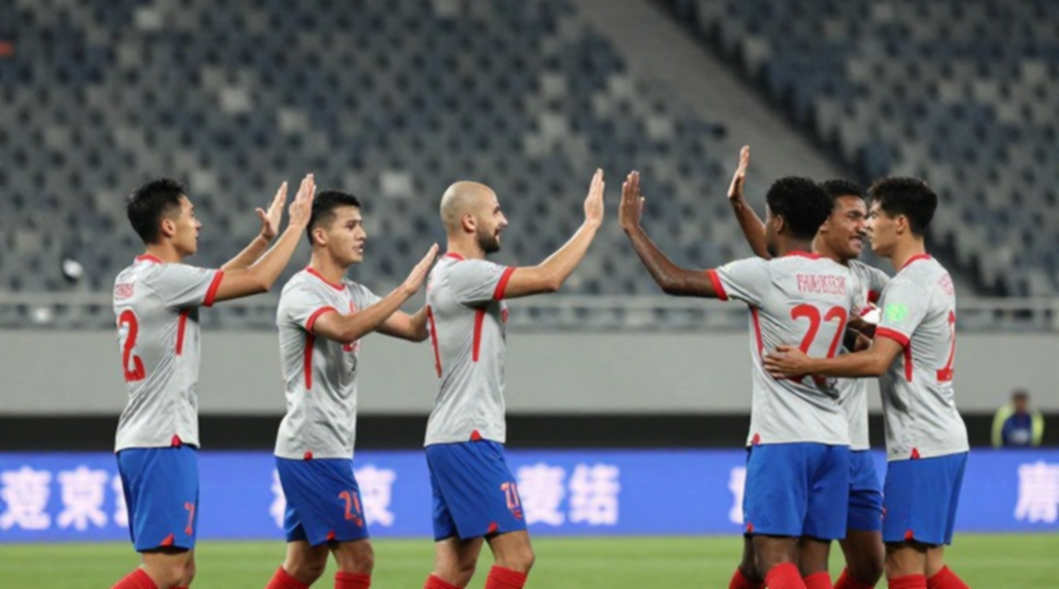
Draw both, and the team has three points and will almost certainly be waiting on the best third-placed route.
U23 Kuwait also have one point, with Uzbekistan and the Philippines still to play.
Put those two lines together and the picture becomes far clearer than the headlines suggest. Four points is a fragile threshold; five points is the safe one — and five points requires a result against U23 Uzbekistan, not against U23 Philippines.
In other words: the Philippines match is not the decider. It is only a necessary condition. The Uzbekistan match is the decider — and it is the match almost nobody in Vietnam is talking about.
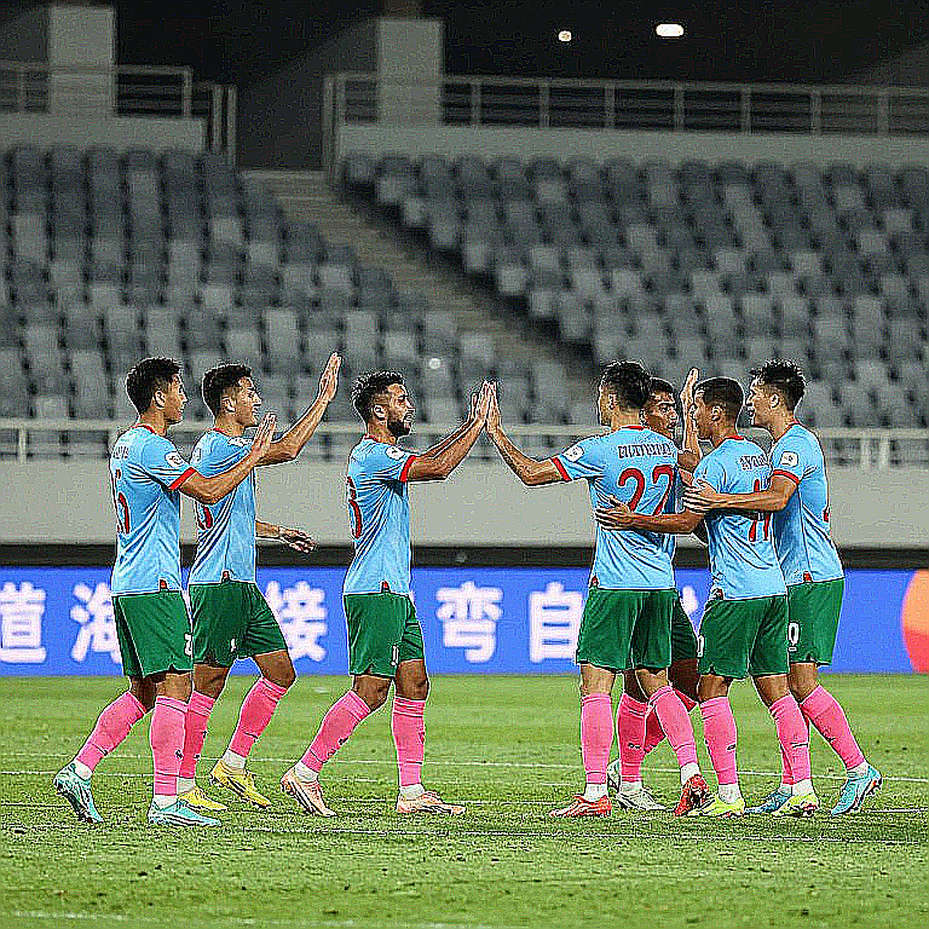
There is another layer, more important than the points: goal difference. The worst realistic scenario is Vietnam beating the Philippines, Kuwait also beating the Philippines, and both losing to Uzbekistan. The two teams finish level on four points. The head-to-head already finished 1-1. In that case, the qualifying slot is decided by goal difference across the whole group stage.
That means U23 Vietnam must not only beat the Philippines, but beat them by more than Kuwait do, while losing to Uzbekistan by less than Kuwait do. A goal-difference race, not a three-point task.
And that is why I call the Philippines match a trap.
The team walks into it carrying two contradictory orders. Order one: you must win, you must win big, you must push up. Order two: you must not concede, you must not expose the space behind the midfield line, because goal difference is the only asset left if the bad scenario unfolds.
A young team caught between those orders usually picks the first. That is instinct. And that is precisely when it is most likely to slip.
U23 Philippines, though written off as underdogs, will almost certainly sit deep and wait to counter. Not because they are better, but because it is the only way a weaker side can take points in a 13:30 slot under this sun: concede the ball, hold the distances, and wait for one moment.
That puts the entire weight on U23 Vietnam's midfield: who sets the tempo, who covers when both full-backs push high, who takes responsibility for blocking the first pass after a turnover. There is no data to answer that. Only one certainty exists — if U23 Vietnam concede first in this slot, the heat will finish the rest of the job.
In Southeast Asian football I have seen too many times a higher-rated team dominate the first half, fail to score, and then collapse in the first fifteen minutes of the second. That pattern does not depend on talent. It depends on whether the team has a plan B.
And here I have to be blunt: I do not know whether coach Dinh Hong Vinh has a plan B. The broadcast gave me the name. It did not give me his preferred formation, his U23 record, or how he reacts when his team goes behind. A coach untested at this level is a variable, and variables cannot be guessed with faith.
Where I could be wrong.
First, I assume U23 Uzbekistan will beat both Kuwait and the Philippines. If Kuwait take a result off Uzbekistan, the whole calculation above collapses. The group opens up, and four points suddenly becomes more than enough.
Second, I assume the Philippines are weaker than Vietnam. The broadcast provides no data on the Philippines at all — no form, no squad, no recent results. Southeast Asian youth football has seen underdogs spring surprises in recent years. An assumption built on feeling is not analysis.
Third, and this is my biggest doubt: I assume the 1-1 draw with Kuwait reflects the true level. It is possible U23 Vietnam played far better than the scoreline, created a superior volume of chances and simply lacked finishing. The opposite is also possible — that they were lucky to hold on for a point. With no shot data, no passing data and no expected-goals figure, both readings can be true.
People remember me for a line I wrote in 2026, but the story started long before that. The lesson I carry after years of making calls is this: the thing to fear is not being wrong, but being right for the wrong reason.
If U23 Vietnam beat the Philippines heavily, I will not credit any tactical system. I will go looking at where they lost the ball, how they defended transitions, and whether that result can repeat against Uzbekistan. A handsome win over an underdog has never been evidence of anything larger than itself.
A team is not eliminated in a press conference, and it is not eliminated in a headline. It is eliminated in the seventieth minute of a match nobody calls decisive.
So here is what I am willing to bet, with a timestamp so you can come back and check.
U23 Vietnam will reach the knockout round if and only if they take at least one point from U23 Uzbekistan. Beating the Philippines is not enough. If they beat the Philippines and lose to Uzbekistan, qualification will hinge on goal difference — a gamble no team should push itself into.
If U23 Vietnam go home after the group stage on four points with a worse goal difference than Kuwait, I will be the first to write a public retraction, with no conditions attached. But if I am right, then what went wrong was not in the players' legs. It was in how we misread this group from opening day.
The Philippines match at 13:30 will be remembered as the biggest game. The biggest game has not arrived yet.